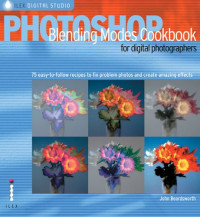
| One reason why Photoshop has become such a powerful and popular image editor is that it allows you to work on a series of layers during the editing or creation of your images. The way these layers interact with one another is governed by Photoshop’s blending modes. Blending modes first appeared when layers were introduced in Version 3, but had their earlier origins in the program’s tool blending capabilities. But how often should you use blending modes? How useful are they?
Photoshop has so many palettes, brushes, filters, gradients, and other tools that it’s possible to be a proficient Photoshop user without ever using more than a fraction of the program’s extensive feature set. For example, some users experiment with different techniques using layers and delete them if they don’t work, while others prefer the History brush to undo work; or you might select all sorts of complex shapes with the Lasso tool and not be aware that the Pen tool is a better choice. In other words, you can achieve great results by using just a sliver of Photoshop’s power—after all, outside certain circles there are no prizes for knowing features for their own sake.
|
|
|
 | | Protocols for High-Efficiency Wireless NetworksThe book, Protocols for High-Efficiency Wireless Networks, focuses on the air interface of mobile networks at different layers according to the OSI Reference Model. The authors provide an overview of several wireless communication systems including GPRS, 3G (in particular, W-CDMA and UTRA-TDD), HIPERLAN/2-type as well as mobile satellite systems.... | | |
|